The silent revolution of space telescopes
Space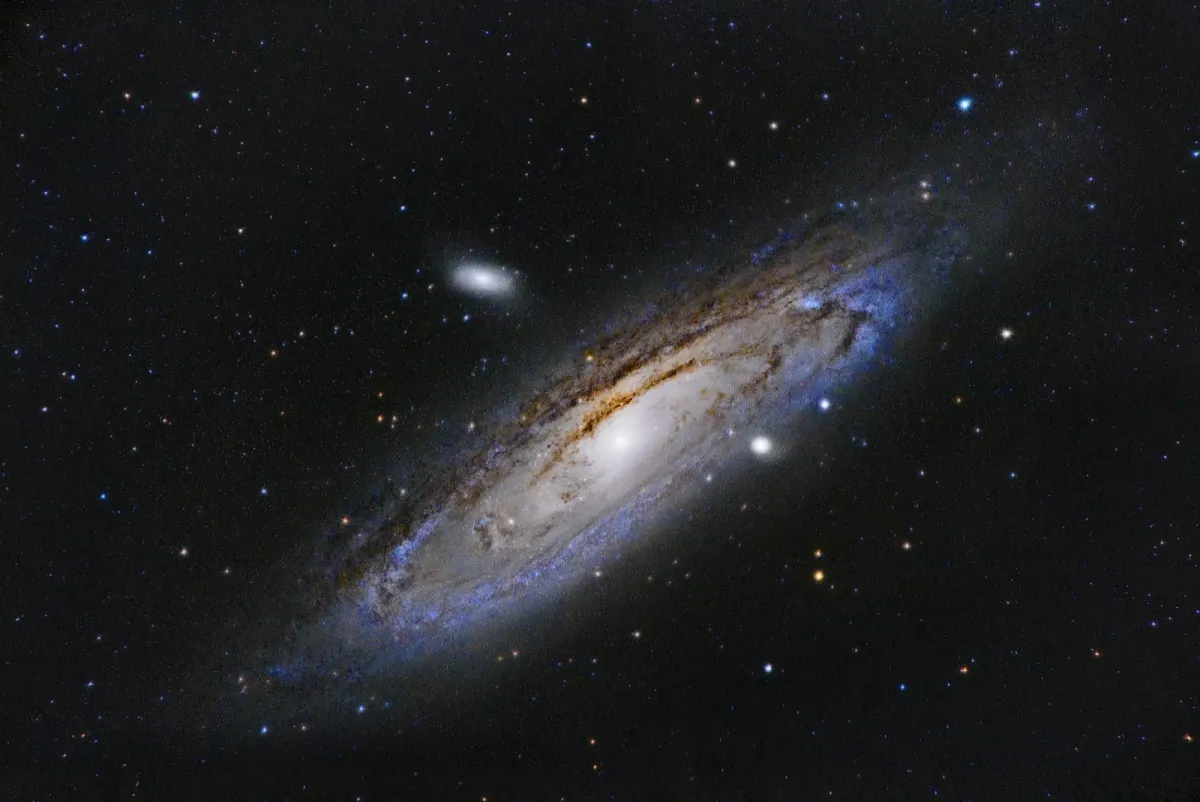
Space telescopes have transformed astronomy by offering clearer views of the universe, revealing distant galaxies, exoplanets, and cosmic history.
For most of human history, the night sky was a mystery illuminated only by naked-eye observation. Ancient civilizations mapped the stars, tracked planetary motion, and built myths around the cosmos, but the universe remained fundamentally unreachable.
That changed with the invention of the telescope.
Today, we are entering a new era of astronomical discovery — one driven not by larger observatories on Earth, but by powerful instruments floating silently in space.
Why space matters
Earth’s atmosphere protects life, but it also distorts light. Stars appear to twinkle because atmospheric turbulence bends incoming light in unpredictable ways.
For astronomers, this creates a major limitation.
Space telescopes avoid that problem entirely. By operating above the atmosphere, they can observe the universe with extraordinary clarity across multiple wavelengths, including infrared and ultraviolet light that never reaches the surface of our planet.
“The universe is under no obligation to make sense to you.”
— Neil deGrasse Tyson
Key advantages of space telescopes
- No atmospheric distortion
- Sharper and more detailed images
- Access to infrared and ultraviolet wavelengths
- Continuous observation without weather interruptions
- Better long-distance detection capabilities
The result is a dramatically clearer and more complete view of the cosmos.
Beyond Hubble
For decades, the Hubble Space Telescope represented humanity’s greatest eye in space. Its images transformed astronomy and became part of modern culture.
Modern observatories are now pushing far beyond Hubble’s capabilities. New telescopes use segmented mirrors, cryogenic cooling systems, and advanced sensors capable of detecting light emitted billions of years ago.
These machines are not simply cameras.
They are time machines.
Because light takes time to travel, observing distant galaxies allows scientists to look back into the ancient history of the universe itself.
| Telescope | Launch Year | Main Focus |
|---|---|---|
| Hubble | 1990 | Visible & ultraviolet |
| Spitzer | 2003 | Infrared astronomy |
| James Webb | 2021 | Deep infrared observation |
Searching for another Earth
Thousands of exoplanets have already been discovered orbiting distant stars. Some exist within the so-called habitable zone, where temperatures may allow liquid water to exist.
Future observatories may eventually detect atmospheric signatures associated with biological activity.
What scientists look for
- Water vapor
- Oxygen
- Methane
- Stable temperatures
- Atmospheric balance
A single discovery could redefine humanity’s place in the universe forever
Final thoughts
Every major leap in astronomy has expanded humanity’s perspective. Space telescopes continue that tradition, allowing us to see farther, deeper, and earlier than ever before.
As technology evolves, our picture of the universe becomes less static and more dynamic. The cosmos is no longer a distant backdrop, but an active frontier of exploration.
In the silence of orbit, far above our atmosphere, these instruments are answering questions humans have asked for thousands of years.
And with every new image, the universe becomes slightly less unknown.