The illusion of stillness in the night sky
Space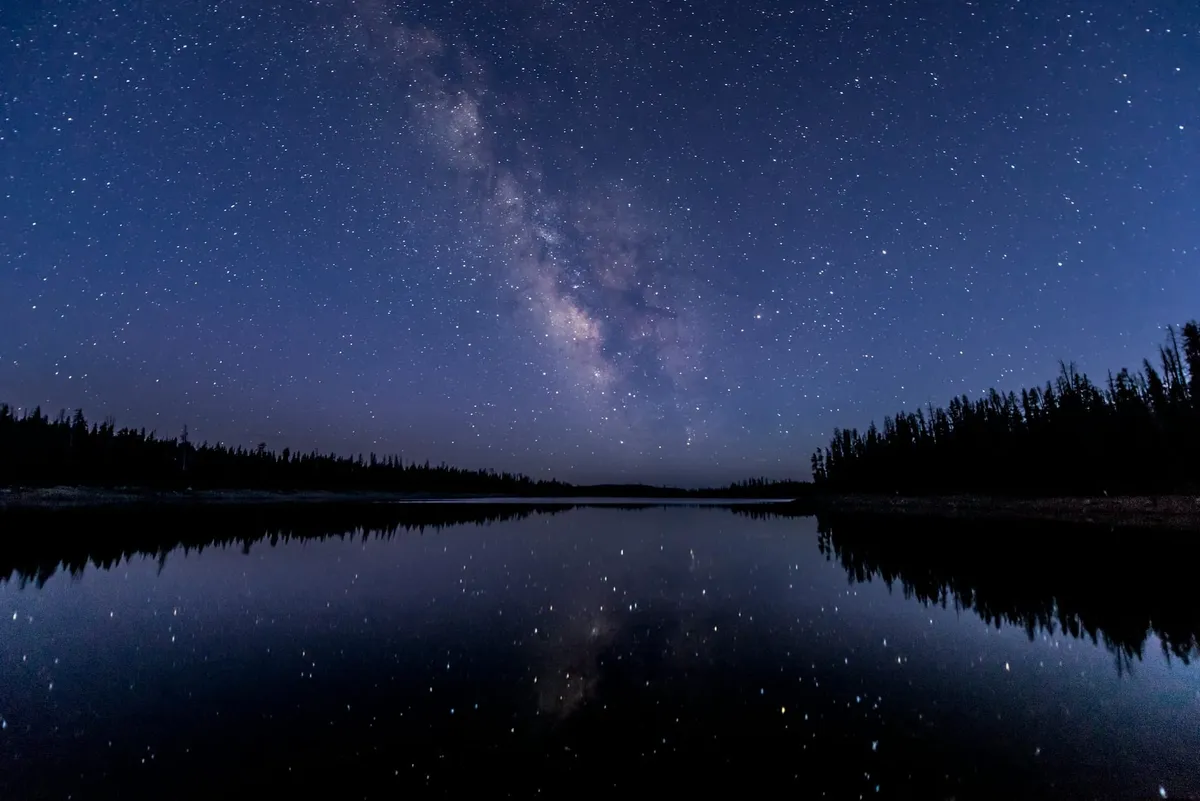
The night sky appears static, but everything within it is in constant motion. What we perceive as stillness is the result of vast distances and time scales far beyond human experience.
When we look at the night sky, it appears fixed and unchanging. Constellations remain in place, and stars seem to hold their positions for thousands of years. This impression of permanence is deeply intuitive, but fundamentally misleading.
In reality, nothing in the sky is still. Stars move through galaxies, galaxies drift through space, and even light itself is traveling across vast distances at every moment. The reason we do not perceive this motion is scale.
Perception of scale
Human perception is tuned to short time frames and small distances. We are sensitive to motion that happens within seconds or meters, but almost blind to changes that unfold over centuries or light-years.
This mismatch creates a powerful illusion: what is extremely dynamic on a cosmic scale appears static to us.
“Stillness is not a property of the universe, but a limitation of perception.”
Cosmic motion
Even objects that appear fixed relative to each other are in motion. Earth rotates, orbits the Sun, and moves with the solar system through the Milky Way.
At larger scales, galaxies themselves are not static structures. They interact, rotate, and sometimes collide in slow gravitational dances that last billions of years.
Why the illusion persists
The illusion of a static sky persists because change is not perceptible within a human lifetime. We do not experience the sky as a system evolving in real time, but as a snapshot.
Astronomy reveals this hidden dynamism by extending our perception beyond immediate experience.
Conclusion
The night sky is not a fixed dome but a constantly evolving structure. Its apparent stillness is not reality, but a consequence of scale and time.